


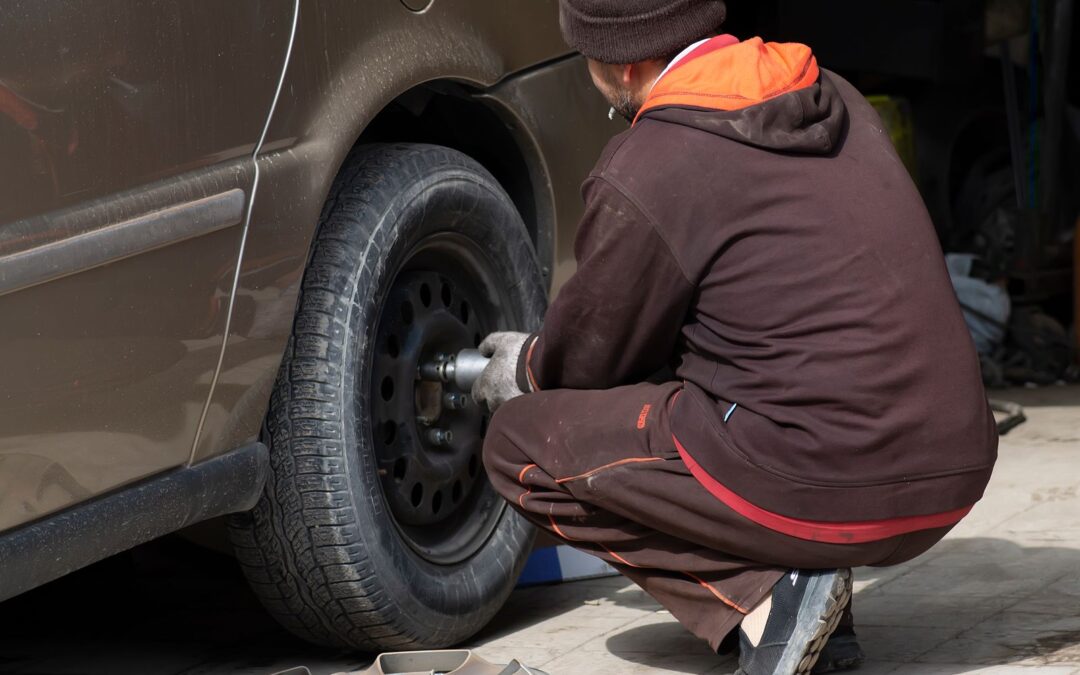
If your steering wheel starts shaking somewhere between 55 and 70 mph, your tires are telling you something. Unbalanced tires are one of the most common causes of highway vibration, and one of the most affordable to fix. Ignore them, though, and a small wobble turns into ruined tires, stressed suspension parts and a miserable drive.
The top signs of unbalanced tires are a steering wheel that vibrates at highway speed, uneven tread wear, and a humming noise that rises with speed. Here is why tires go out of balance, every symptom to watch for, and when to get it taken care of.
Feeling a shake at highway speed? Huron Automotive balances tires at both Green Bay shops, and if the vibration turns out to be something else, you will know before you spend a dollar on the wrong fix.
Or call (920) 406-2860 (Huron Rd) or (920) 434-8000 (Velp Ave)
Why Tires Go Out of Balance
No tire is perfectly uniform. Tiny weight differences around the tire and wheel are normal, which is why small clip-on weights are added when tires are balanced. Over time, everyday driving throws that balance off:
- Normal tread wear: as tread wears down, weight distribution around the tire changes.
- Pothole and curb impacts: one hard hit can knock a balance weight off the wheel or bend the rim slightly. Green Bay’s freeze-thaw pothole season makes this a spring ritual for many local drivers, and the same impacts are rough on your suspension.
- Uneven loading: regularly hauling heavy cargo on one side of the vehicle wears those tires faster and throws off balance.
- Manufacturing variation: even brand-new tires and wheels have small imbalances, which is why new tires are always balanced at installation.
6 Signs of Unbalanced Tires
Unbalanced tires almost always announce themselves. These are the symptoms, from most common to easiest to miss:
Balancing and alignment are not the same thing. Balancing corrects weight distribution around each tire and wheel. Alignment corrects the angles the wheels sit at. A balance issue shakes; an alignment issue pulls. Many Green Bay drivers need one and assume the other, which is why we check both when a vibration or pull comes in. Our balancing vs. alignment guide breaks down the difference in detail.
How Often Should You Balance Your Tires?
A good rule for Wisconsin driving is to have your tires balanced every time they are rotated, roughly every 5,000 to 7,500 miles, and any time a new tire is installed. Add an extra check after a hard pothole or curb hit, or the moment you feel a new vibration at speed.
Staying on that schedule pays for itself. Balanced tires wear evenly, which can add thousands of miles to a set of tires, and the service itself is quick and inexpensive compared to replacing tires early.
Tire Balancing in Green Bay
Huron Automotive, founded in 2010 and family-owned, provides tire balancing, rotation and wheel alignment services at both Green Bay locations, with a full tire shop when a tire is too far gone to save. If your vibration turns out to be a bent wheel, a separated tire or a suspension issue instead of a balance problem, our technicians will tell you before any work begins.
While your car is with us, you can use our comfortable waiting area with complimentary wifi and coffee, take advantage of 24-hour drop-off, or use our shuttle service and loaner vehicles to keep your day moving.
Frequently Asked Questions
How much does tire balancing cost in Green Bay?
National ballparks typically run $15 to $50 per tire, and balancing is often included when you buy new tires or have them rotated. Those are general ranges, not a quote. The exact price depends on your vehicle and wheels, and you will always see it before we start.
Can I drive with unbalanced tires?
You can, but you pay for it. The vibration is annoying, and the real cost shows up later as uneven tread wear, extra stress on suspension and steering parts, and worse fuel economy. A quick balancing visit is far cheaper than replacing tires early.
What is the difference between tire balancing and wheel alignment?
Balancing fixes uneven weight around the tire and wheel, which causes vibration. Alignment adjusts the angles of the wheels, which fixes pulling to one side and uneven wear from bad geometry. They are different services, and many vehicles need one, the other, or both.
How long does tire balancing take?
Balancing all four tires typically takes 30 to 45 minutes. Combined with a rotation, most visits are done in about an hour, which makes it an easy service to fit into a lunch break.
Will balancing fix every vibration?
No. Balancing fixes vibration caused by uneven weight distribution. A bent wheel, a separated or damaged tire, worn suspension parts or a brake issue can all cause similar symptoms. That is why we road-test and inspect before balancing, so you fix the actual cause the first time.
Do new tires need to be balanced?
Yes. Every new tire has small weight variations from the factory, and every wheel does too. Balancing at installation is standard practice and skipping it means a brand-new set of tires can vibrate from day one.
Stop the shake before it wears out your tires.
Call Huron Road at (920) 406-2860 or Velp Avenue at (920) 434-8000, or book online in about a minute. Both shops are open Monday through Friday, 7:30 a.m. to 5:30 p.m.