


Your alternator has two jobs every time you drive: it powers everything electrical in the vehicle and it keeps the battery charged. When it starts to fail, the symptoms look almost identical to a dead battery, which is why so many drivers replace a perfectly good battery only to end up stranded again a week later.
So what causes an alternator to go bad? Most fail from simple age and mileage, but worn drive belts, corroded wiring, oil leaks and hard Wisconsin winters all speed the process up. Here is what actually kills alternators, the warning signs to watch for, and how to tell an alternator problem apart from a battery problem.
Battery light on, or a car that struggles to start? Huron Automotive tests the full charging system, battery, alternator and starter, at both Green Bay shops, so you only replace the part that is actually bad.
Or call (920) 406-2860 (Huron Rd) or (920) 434-8000 (Velp Ave)
What Does the Alternator Do?
The alternator converts mechanical energy from the engine into electrical energy. A drive belt connected to the engine spins a pulley on the alternator, which turns a rotor and generates alternating current (AC). That current is converted to direct current (DC), which charges the battery and runs everything from your headlights to your heated seats.
Once the engine is running, the alternator is doing nearly all the electrical work. The battery’s main job is starting the car. That distinction matters, because it is the key to figuring out which of the two has failed.
The 5 Most Common Causes of Alternator Failure
Alternators are built to last roughly 5 to 8 years, but they rarely die of old age alone. These are the causes we see most often:
Why Green Bay winters are hard on charging systems. Cold weather thickens engine oil, weakens battery output and forces the alternator to work its hardest exactly when the battery is at its weakest. Short winter trips with the defroster, heater and seat warmers running never give the alternator enough time to replace the power used at startup. That is why marginal alternators so often fail in January rather than July.
Warning Signs of a Failing Alternator
An alternator on its way out rarely fails without warning. Watch for these signs:
- Battery warning light on the dash: the red battery icon usually means the charging system, not the battery itself, has a problem.
- Dim or flickering headlights and interior lights: lights that dim at idle and brighten as you rev are a classic undercharging symptom.
- Slow cranking or a car that will not start: the battery is not being recharged as you drive, so each start has less power than the last.
- Electrical gremlins: power windows slowing down, the radio cutting out, or dashboard gauges behaving erratically.
- Engine stalling: modern engines need steady voltage to keep running, so a failing alternator can stall the car while driving.
- Unusual sounds: squealing from a slipping belt, or a grinding or humming noise from worn alternator bearings.
- A burning smell: an overworked alternator or slipping belt can produce a hot rubber or electrical smell.
Is It the Battery or the Alternator?
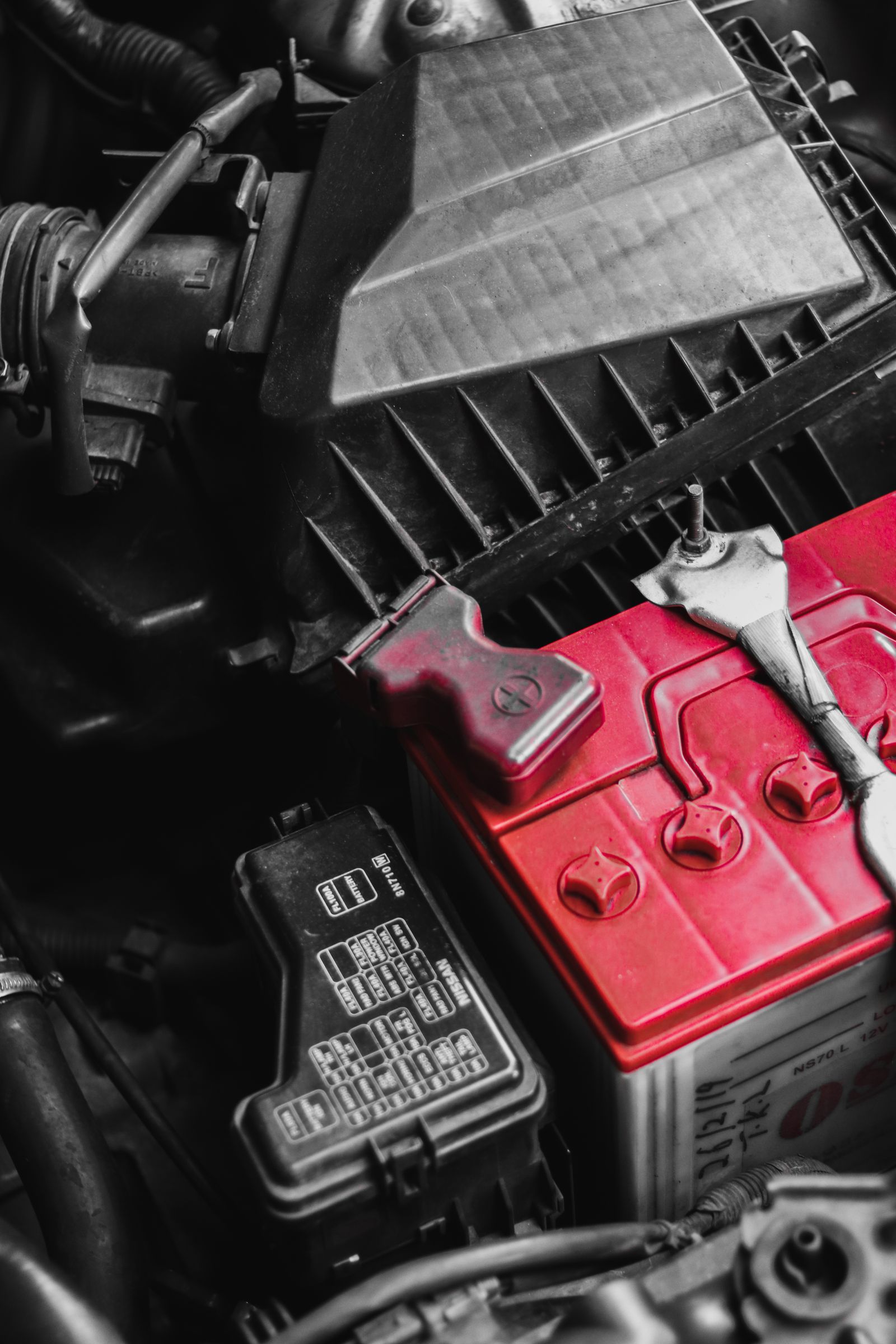
The quickest tell is what happens after a jump start. If the car starts with a jump and keeps driving normally, the battery was likely the problem. If the car starts with a jump but dies again while driving, the alternator is not recharging the battery and the alternator is the problem.
Neither guess is as reliable as a two-minute charging system test. If testing shows the battery is the issue, a battery replacement is a quick visit. If the alternator is at fault, catching it early means you schedule the repair instead of waiting for a no-start in a parking lot.
Alternator Testing and Repair in Green Bay
Huron Automotive, founded in 2010 and family-owned, provides alternator repair and replacement and complete auto electrical diagnostics at both Green Bay locations. Every charging system concern starts with a test of the battery, alternator and starter, so the repair fixes the actual cause instead of the most convenient guess.
While your car is with us, you can use our comfortable waiting area with complimentary wifi and coffee, take advantage of 24-hour drop-off, or use our shuttle service and loaner vehicles to keep your day moving.
Frequently Asked Questions
How long does an alternator usually last?
Most alternators last 5 to 8 years, or roughly 80,000 to 150,000 miles. Hard use shortens that: frequent short trips, extreme cold, heavy electrical loads and oil leaks all accelerate wear on the internal bearings, brushes and voltage regulator.
Can I keep driving with a bad alternator?
Not for long. Once the alternator stops charging, the car runs entirely off the battery, and most batteries will keep a modern car alive for well under an hour of driving. If your battery light is on, head straight to a shop rather than running errands, because the car can stall without warning.
How much does alternator replacement cost in Green Bay?
National ballparks for alternator replacement typically run $500 to $1,000 including parts and labor, with the vehicle’s make and model driving most of the difference. Those are general ranges, not a quote. The exact price for your vehicle depends on which part has actually failed, which is why we test the charging system first and give you a written estimate before any work begins.
Will a bad alternator ruin a new battery?
Yes. A battery that is never fully recharged sulfates and loses capacity permanently, and a battery drained flat repeatedly can fail within weeks. If you have replaced a battery recently and the problem came back, have the alternator tested before buying another battery.
Can cold Wisconsin weather kill an alternator?
Indirectly, yes. Cold weakens the battery, which forces the alternator to work harder and longer on every trip. Add road salt corroding connections and winter short trips that never fully recharge the battery, and a marginal alternator often fails during the coldest weeks of a Green Bay winter.
Does Huron Automotive replace alternators on all makes and models?
Yes. Our technicians service most makes and models at both Green Bay shops, and every alternator job starts with a full charging system test so you know the diagnosis is accurate before approving the repair.
Get your charging system tested before it leaves you stranded.
Call Huron Road at (920) 406-2860 or Velp Avenue at (920) 434-8000, or book online in about a minute. Both shops are open Monday through Friday, 7:30 a.m. to 5:30 p.m.